

Solution
Eliminating Heat Stress “Reflective PE Screen” Keeps Tomatoes Thriving and Work Environment Cool

OMORI LOHAS CREATE, located in Shijonawate City, Osaka Prefecture, is a greenhouse operation established in 2022 when Omori Kaisoten, Ltd., a harbor transportation company, newly entered the agricultural sector. They cultivate premium fruit tomatoes using “Sand Cultivation”*—a method that uses sand and liquid fertilizer instead of soil.
Driven by the philosophy of providing “safe and delicious produce,” they are dedicated to a unique cultivation approach that strictly avoids soil, pesticides, and agricultural water, relying instead on carefully washed and polished ‘river sand.’
In the summer of 2023, they installed “Reflective PE Screen” on the greenhouse roof for comprehensive heat shielding. We spoke with them to hear about the challenges they faced before installation, their experience with the screen, and their candid feedback.
* Note: What is Sand Cultivation?
Sand Cultivation is a method that uses sand and liquid fertilizer as a substitute for soil. The granular sand offers excellent ventilation and water retention, eliminating the need for soil replacement and allowing easy crop rotation.
Since nutrients rarely accumulate in the sand, it is known to prevent consecutive cropping obstacles that often occur due to changes in the growing media’s composition. Furthermore, the moderate stress placed on the seedlings tends to naturally increase their sugar content, leading to high-quality produce. Though relatively new, this cultivation method is gradually gaining popularity.
Challenges of greenhouse farming in summer
In recent years, summer frequently brings consecutive sweltering days. Since air tends to stagnate, the temperature inside a Plastic Greenhouse often exceeds the outside temperature, creating an extremely harsh environment.
Direct sunlight can cause internal temperatures to soar past 40°C (104°F).
This severe heat is detrimental to crops, often causing defects and other negative impacts.It also poses risks such as heatstroke and dehydration to the producers, necessitating sufficient countermeasures.
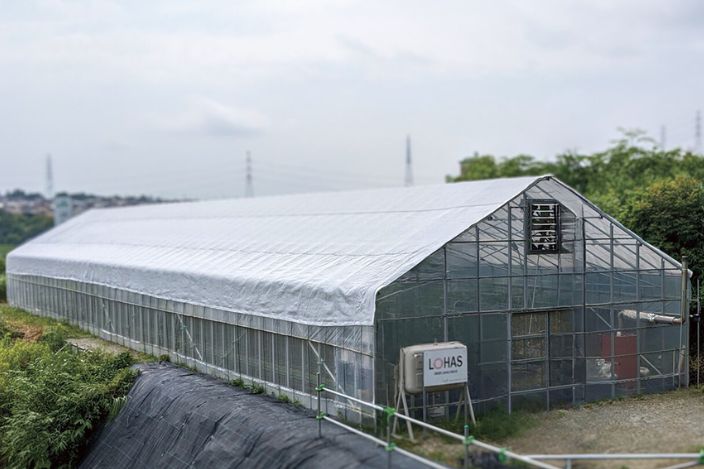
A variety of heat-shielding products are available to mitigate this intense heat.
Introducing “Reflective PE Screen”
The product featured in this case study, “Reflective PE Screen”, is a high-performance screen that achieves both shading and heat shielding by highly diffusing and reflecting infrared rays and other rays.
This article summarizes OMORI LOHAS CREATE’s usage, the benefits they gained, and detailed product information.
Benefits Gained by using “Reflective PE Screen”
・Eliminating high temperature damage to tomatoes
・Improving the working environment in summer
Tomatoes wiped out by high temperature damage the previous summer (2022)
Q: We heard that before using “Reflective PE Screen”, you were facing physiological disorders caused by high temperatures in your tomatoes. Could you describe the situation?
A: Certainly. We were seriously struggling with tomato high temperature damage. The year before we installed the screen, the entire crop was wiped out. We actually had to halt shipments for about two months over the summer.
We understood that other tomato farmers were in a similar situation, but it was really demoralizing for us. Since it was only our second year of cultivation, that incident really drove home the difficulty of summer tomato farming.
When high temperature damage occurs, the area near the stem cap turns yellowish, which negatively affects not only the color but also the flavor. We decided the produce was simply not suitable for sale and stopped shipping.
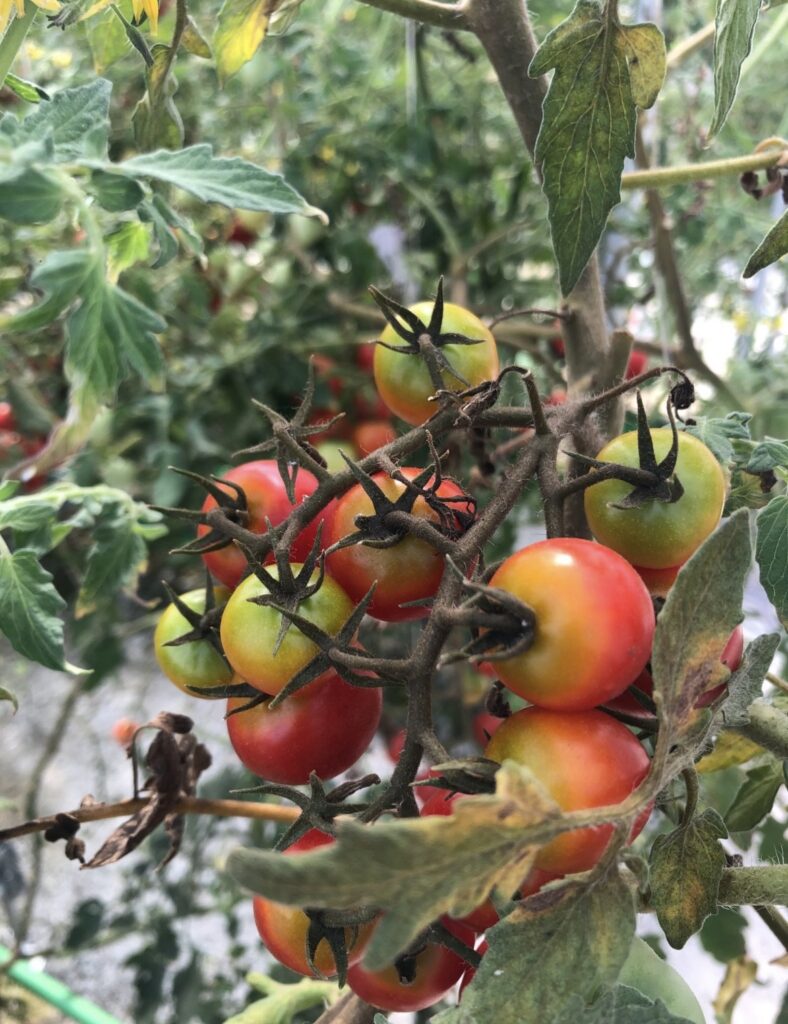
To combat the heat, we had already installed internal shading curtains and automatic fans that kicked on when the house temperature hit 30°C (86°F). But those measures were nowhere near enough to contend with the intense heat we were facing.
The heat gets worse every year, so we knew we absolutely needed to take more drastic action.
Heatstroke prevention for workers was also a challenge
Q: Was the working environment extremely hot before you installed the screen?
A: In the middle of summer, the house was like a sauna—it was just incredibly hot!
“Heatstroke prevention for our workers” was another major challenge. Working in such high temperatures decreases efficiency, and most importantly, it poses a serious risk of heat stroke.
Previously, we would take frequent breaks—working for 30 minutes, then stepping outside the greenhouse to rest. However, even with all those breaks and constant hydration, it was still unbearably hot. We knew we absolutely had to do something to improve the working conditions.
Q: What was the key reason that made you decide to give this product a try?
A: The opportunity came up when we were already considering new materials for summer heat mitigation, and that’s when “Reflective PE Screen” was introduced to us. We felt that using only internal shade screens wasn’t enough to keep the heat out of the greenhouse, so we were planning to implement some kind of measure on the roof itself.
We looked into reflective coatings, but we felt that a product offering physical heat shielding would be more effective. Hearing that it had already been successfully adopted in hotter regions, such as Kochi Prefecture, was the final push, and we decided to implement it immediately.
Immediate impact: Improved working condition
Q: What kind of impact or changes have you observed since installing the screen?
A: Walking into the greenhouse after the installation of the screen my honest reaction was, ‘This is completely different! It’s incredibly cool!’ Even on cloudy days, I noticed that the sensory temperature was vastly lower.
We actually measured the temperature difference between the greenhouse with the screen and the adjacent, untreated house.
The “Reflective PE Screen” -equipped house showed a reduction of nearly 2℃ (3.6°F) at the maximum. However, when you’re actually working inside, I feel that the sensory difference is probably even greater than 2℃. That’s how much of a difference we experienced.
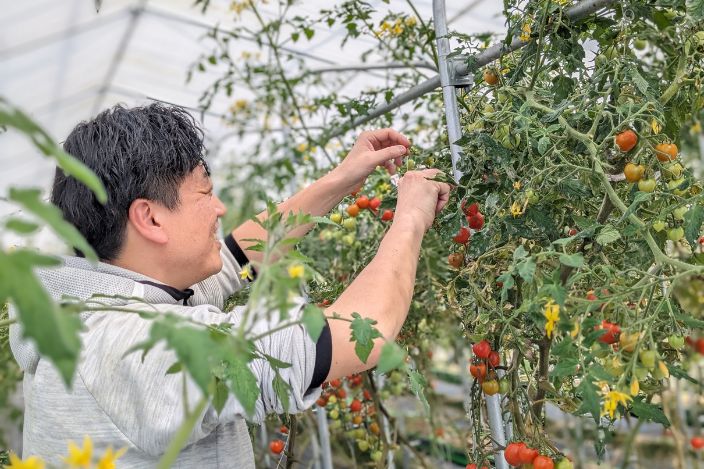
Before installing the screen, the summer midday heat was so extreme that we sometimes had to harvest early in the morning. Even after harvesting, if we were short on packaged items, we occasionally had to re-enter the greenhouse during the day. When that happened, we would be completely drenched in sweat; it was truly tough.
Because of the hazardous heat, we needed to take frequent breaks—after just 30 minutes of work. And even those 30-minute intervals were intensely hot and grueling.
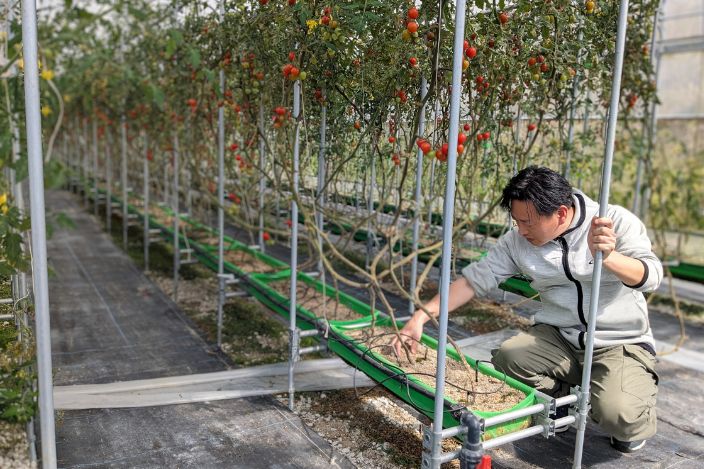
Since the installation, the heat is now manageable enough that we can comfortably start work around 9:00 a.m.
We are still maintaining our policy of taking breaks every 30 minutes, but now our workers are not suffering from heat-related illness, and our overall work efficiency has definitely improved.
I certainly feel that the improved working environment has led directly to higher operational efficiency.
Because the screen is suppressing the temperature rise inside the greenhouse, the automatic fans—which are set to turn on at 30℃(86℉)—now start their operation one to two hours later than they do in the untreated houses. We are very happy because this is also contributing to energy savings.
High temperature damage to the tomatoes has been completely eliminated
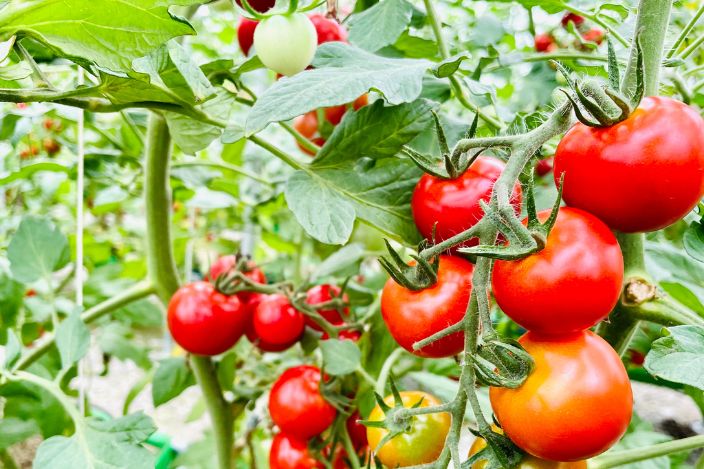
While we had periods in last year where we couldn’t ship our tomatoes due to high temeperature damage, in the summer of 2023—after implementing the screen as a countermeasure—we experienced zero instances of high-temperature damage itself.
We encountered some slight color unevenness, but the taste was still excellent, and this did not affect sales. Crucially, it led to a significant overall improvement in quality.
It seems many tomato farmers were unable to ship during the peak of summer, so the supermarket buyers were really surprised and told us, ‘It’s amazing that you are able to ship during this period!’ That was a moment of genuine pride for us, and we were simply thrilled.
Our aim is to continue delivering even more delicious tomatoes.Looking ahead, we plan to explore processed products and the expansion of our greenhouse operations.
Q: Are there any other endeavors or initiatives you are considering for the future?
A: Yes. Currently, we only have one greenhouse, so we are focused on expanding our total greenhouse area in the future. We also want to challenge ourselves by mass-producing processed products.
Tomatoes are difficult to process, and often, B-grade products end up being thrown away. Since these are crops we grew with such dedication, we believe it’s essential to establish reliable methods for utilizing all of them.
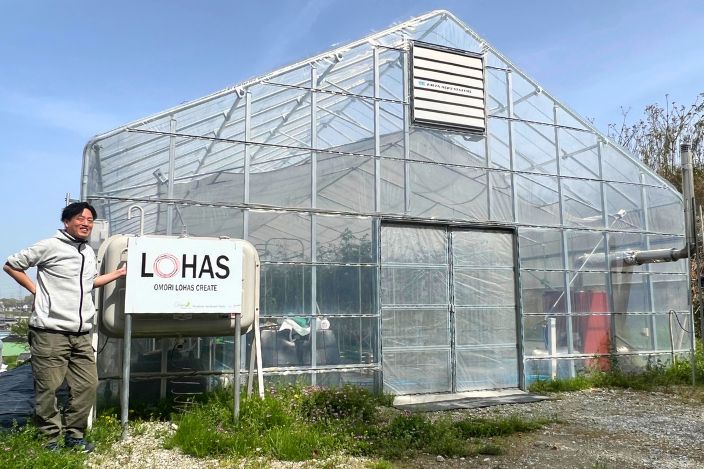
Above all else, we want to continue delivering fresh and delicious, pesticide-free tomatoes to our consumers. Right now, we are collaborating with a university fertilizer research team, conducting repeated experimental cultivation every day to grow even more delicious tomatoes.
We are truly hopeful for this coming summer as we believe “Reflective PE Screen” will continue to play a crucial role in creating an even better environment for cultivating our tomatoes!
Note: This farm deploys the screen over the roof from May through September. The screen is removed and stored in the warehouse during the cooler months.
Related products
Contact Us
if you are interested in what we can do with our blow molding and weaving technologies,
please contact us for a consultation.